

Notes on creativity, money, aging and the strange idea of success
There are questions you hear your entire life as a creative person. You can make something beautiful and the response is almost always the same: “Does it pay well?” It is a rhetorical question, because almost everywhere in the world people in independent creative professions earn less than people who execute somebody else’s ideas. That said, the word “creative” has become increasingly elastic. Marketing people now call themselves creatives too.
That rhetorical question, especially in a country like the Netherlands where it keeps returning with almost religious persistence, says a great deal about our Calvinist nature. The idea that someone might have genuinely enjoyed making something beautiful is deeply unsettling to people who have spent their lives forcing themselves into systems they dislike, racing through mortgages, car payments, entertainment packages and holidays. All the things we were taught from childhood to see as the necessary ingredients of a successful and happy life.
A growing number of people have started wondering whether those material pleasures actually deliver the happiness they promise, and I encourage that doubt wholeheartedly. In my long life I have known nearly all of those comforts without ever truly being able to value them properly. Unfortunately I have also known the opposite. There were periods when I lived very comfortably, financially speaking, but there were also many years when I lost everything and did not have a coin to my name. To be honest, those periods usually lasted longer, because climbing upward in material terms costs far more energy than falling downward.
I am seventy now and I still work hard, with varying degrees of success. Older people are rarely asked meaningful questions. It is quietly assumed that we are barrels full of outdated ideas, and to some extent that is true. Many of us remained loyal to ideas that currently no longer enjoy broad public support. I say “currently” on purpose, because ideas behave very much like fashion trends. Sooner or later they return.
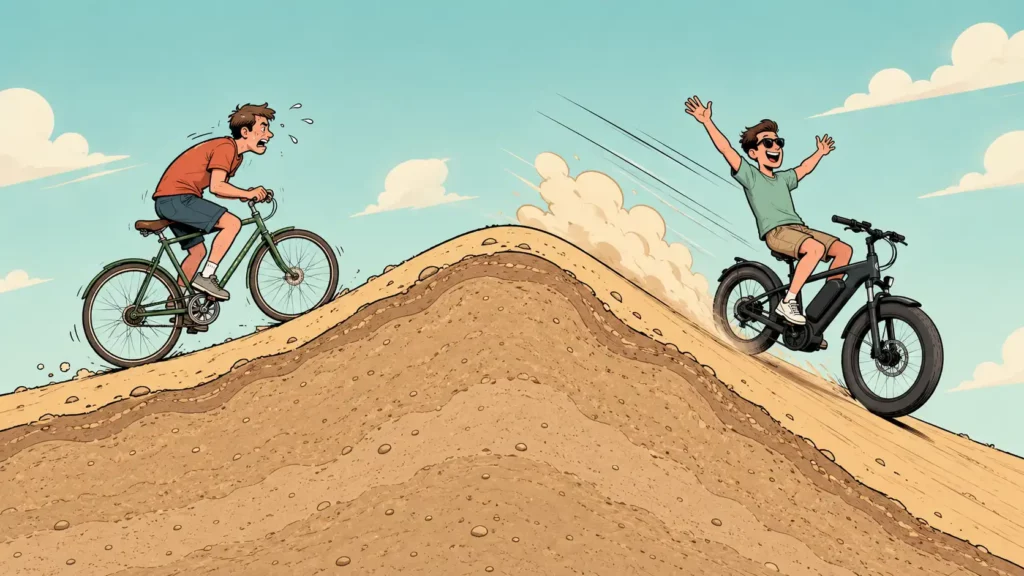
In my lifetime I have seen an endless procession of important innovations. The invention of the atomic bomb was just before my time, but I witnessed the Cold War, the automatic sandwich toaster, ready-made meals, microwave ovens, colour television, portable telephones, transistor radios, computers, social media, electric bicycles, and cheap flights to distant countries where people sit beneath the same palm tree drinking the same cocktail, only twelve hours farther from home. I saw all of it become popular for one simple reason: it was new, and we have a habit of mistaking new for better.
People who reach the age of one hundred are sometimes asked how they managed it, and the answers are never particularly useful. One swears by two eggs every morning. Another credits optimism. Occasionally somebody insists that continuing to smoke somehow contributed to a long and happy life. None of those answers help much, because there is no real constant hidden inside them.
If you were to ask people my age what ultimately proved meaningful and what turned out to be nonsense, the answers would probably be just as diverse, but far more interesting than the question: “Does it pay well?”