Marktplaats

Ik was bezig met het archief van De Opkamer en ik beschikte over twintig Iomega zipdrives, maar geen inlezer. Ooit was ik de adapter kwijtgeraakt en na het apparaat twee keer te hebben meeverhuisd, besloot ik het ding voordat de derde verhuizing plaatsvond gewoon maar in de vuilnisbak te gooien. Wat heb je immers aan … Read more

Ode aan een vergeten schrijver

Michael Eenhoorn gedroeg zich zoals een schrijver zich hoorde te gedragen, althans in mijn ogen. Altijd goed gekleed maar zelden nuchter liep hij de kroegen af met twee simpele verhalen. Het eerste ging over zijn kortstondige affaire met Ramses Shaffy en dat verhaal zorgde steevast voor een geboeid publiek. Die voorbije relatie met Ramses zat … Read more

De Opkamer

Als iemand me indertijd, in 2000, had verteld dat er ooit een archiefsite zou komen met uitgaven van De Opkamer dan had ik die gedachte van de hand gewezen als pure waanzin. Toch heb ik al die tijd keurig de backups bewaard, dus misschien had ik toch wel enig vermoeden dat er vroeg of laat … Read more

Tandy 102

Vanaf 2004 ben ik een ongekend aantal malen verhuisd, maar inmiddels woon ik alweer vijf jaar aan de Nieuwmarkt en ik ben niet van plan deze woning, anders dan op de punt van een geweer, te verlaten. Op de begane grond is een verpleegtehuis, dus mocht ik van ouderdom uit elkaar vallen of dement worden, … Read more

Een onbekende jongeman

De oorspronkelijke eigenaar van het schilderij loopt een fiks aantal miljoenen mis en deskundigen die het altijd graag met elkaar oneens zijn, al was het alleen maar vanwege de publiciteit, zijn het zonder slag of stoot met elkaar eens. Eindelijk is er weer een ‘nieuwe’ Rembrandt gevonden. De manier waarop dit alles verliep roept argwaan … Read more

Queen Swan

As a young photographer, I was pretty confused. I guess most young people are confused in one way or another. My mother was a war victim, my father a loving but somewhat depressed alcoholic, and as far as I know I was doing pretty good until a horse accident at age twelve crippled me. It was not so much the handicap that bothered me. It was the way other people dealt with my handicap that nearly drove me insane. I won’t go into detail about my adventures with medical doctors, nurses, teachers etc. but all these experiences resulted in a profound disgust of authority and what is or was to be considered normal.

Looking back on it all and awaiting two new operations indirectly resulting from that same accident in 1967, it seems so obvious why I chose to become a studio photographer instead of traveling around the globe as most young ambitious photographers would do. I had enough problems walking straight, so carrying equipment around was not really an option for me.

This hatred of everything that is to be considered normal also guided me towards the subjects I photographed. People who were all but middle of the road. People like me, although I did not yet understand that at the time. Like most people suffering from psychological problems I thought I was sane while the rest of the world was insane. John Lennon once wrote a beautiful line: One thing you can’t hide / Is when you’re crippled inside.

It took me decades to come to terms with who I am and once I finally got to that point in my life my photographs started to change dramatically. Color was introduced in abundance. And I became fascinated with people who could dance or play soccer. All these things I had wanted to ignore because I could not participate.
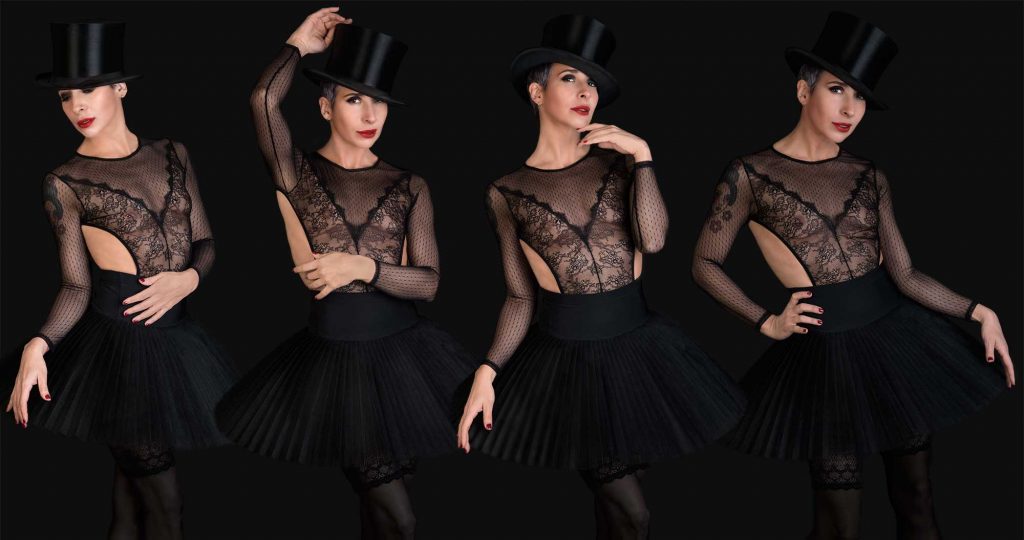
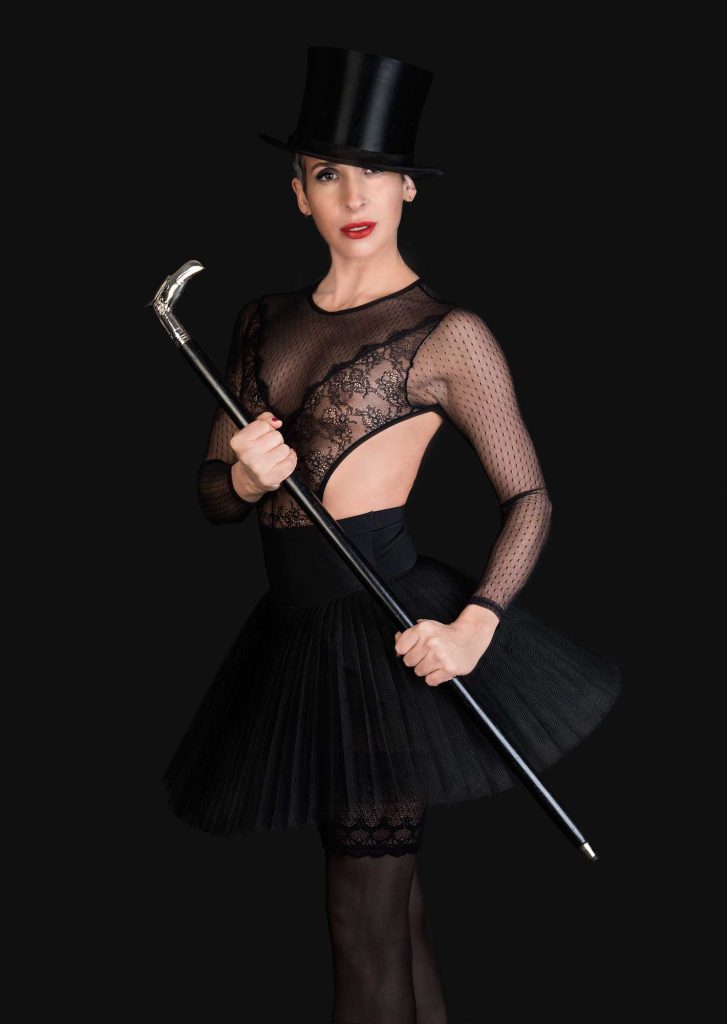
Some time ago I was doing a video on the Amsterdam School of Burlesque and while setting up my camera a dancer was practicing on stage. I looked at her movements and I was fascinated. These were the precise and elegant moves of a professional ballerina and as I found out later she was in fact just that.

Of course, I had to photograph her in the studio and to my surprise, she said yes and we did a photo shoot with the top hat and the black tutu. After she left I looked at the stick I use on days that I cannot walk at all and regretted not having that stick in the picture because it fitted in perfectly. So we redid the shoot and this is the result.
Obesia Grandé

At times, I have to remind myself that it is not completely true when I say I am a portrait photographer at heart. I may have started out as a portrait photographer, but by directing the models I photograph, I distance myself from what a real portrait should be – an objective image of the person portrayed. Of course, I am very much aware that there is no such thing as pure objectivity in photography, but asking people to make specific dramatic gestures does not fit in what we call portrait photography.

So what is my role in photography, I often ask myself. Is this glamour photography? Not really although I do my best to make people look good in a picture. Glamour is all about trying to reach broad audiences through creating larger than life images. In many directories I am listed as a fine art photographer, but I have changed over the last few years. I am slowly going back to where I started out with the Rockers series. An art critic called me an amateur anthropologist as that series first came out. Maybe that is true or maybe I just like the idea. I guess once there are no questions left I will stop doing what I do.

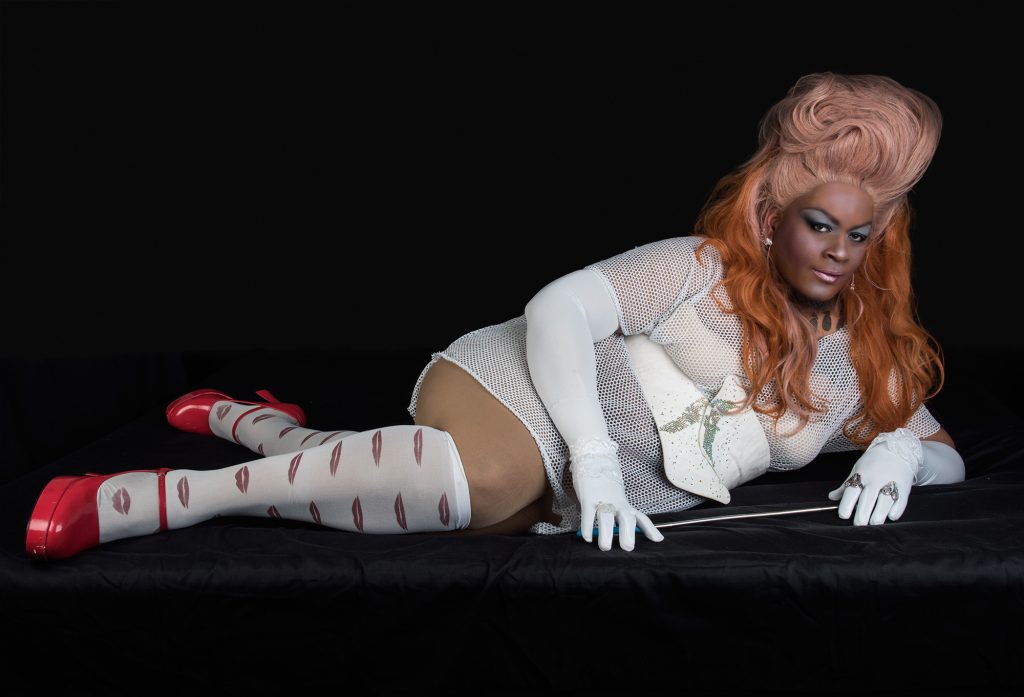
Model: Obesia Grandé


1971 photograph

People often tell me I am obsessed with sexuality. I do not think that is true, although I must admit I am intensely fascinated by people who are not middle of the road.

The photograph above, taken in 1971 when I was only sixteen may lead the viewer to think I was a depressed adolescent, but the opposite was true. I was happy. I spent my time chasing girls who were into hockey and who dressed in mohair sweaters, plaid skirts and penny shoes. I had the time of my life.

But of course I knew very well how contemporary photography should look like. So, with my first camera, a Russian Zenith-E I tried to copy the works of photographers I admired.

Come to think of it, I always seem to post my oldest works in the news section. Maybe I should create a page for these older works.


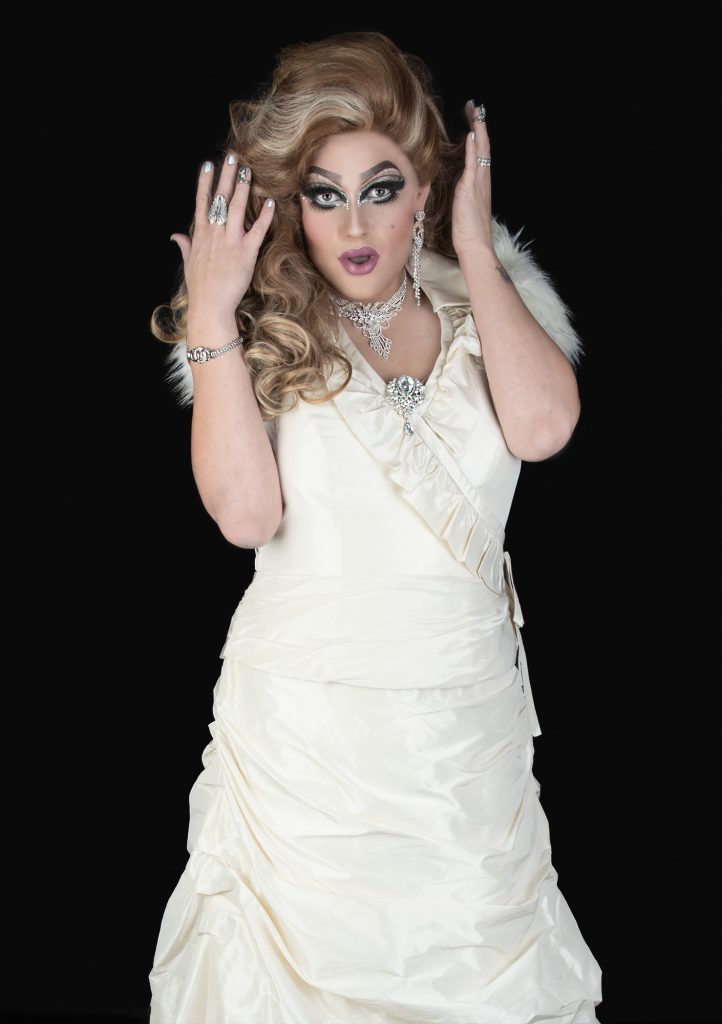
Angelina Loqui

I am still working on the Third Gender series, and I will probably be working on this project for the rest of the year. Not because it is hard to find the right models, but I am no expert at socializing on networks, and I am quite strict when it comes to making appointments.

Call me old-fashioned, but I expect people to show up when I make an appointment. The queens I work with are often real diva’s. At least half of those who are offered a free shoot to participate in the book will at least cancel the shoot once. I experienced this before in photographing drag queens, so I have learned to refuse rescheduling shoots. An attitude that slows down production quite dramatically, but accepting endless rescheduling is not workable either.

But the upside of working with diva’s is that they are often very creative and fun to work with. Scheduling models for the 21st Century Madonnas series involving nudity was quite time-consuming too. There are currently enough horror stories about photographers on the web to demotivate most people to pose.

Angelina, however, is one of those people who will always keep appointments and I absolutely love working with her.


Stage photography

I am a studio photographer at heart. I like to control the lights, I love neutral backgrounds because there is no distraction of the person photographed. Of course, it also has a timeless quality to it that I like. Seeing a photograph of a model photographed in an empty factory or an abandoned building automatically dates the photograph back to somewhere between 1995 and 2010. The older photographers and collectors will always recognize a 1970s photograph by the doom and gloom clouds above the subject and the excessive use of wide-angle lenses.

Working on the book ‘The Third Gender’ I realize I cannot get away with the use of studio portraits only, so there will be a lot of behind the scenes photography to illustrate how the project evolved. Also – and here comes the hard part for me – I will have to go out to do stage and event photography. I have very little experience with that, but I noticed it has become a lot easier with digital cameras, thanks to the high ISO values one can work with.